Is Rio Celeste Worth It? Our Family Detour from Arenal to Guanacaste
If you are mapping out a Costa Rica family road trip, you might be wondering if the drive to Tenorio Volcano National Park is worth the effort. We can confidently say yes. We visited Rio Celeste on our route from the Arenal Volcano area out to the Guanacaste (North Pacific) beaches, and it was the perfect, magical detour.
While the hike to Rio Celeste is a bit challenging in spots, getting off the beaten path to see this brilliantly blue river was an experience our family will never forget. Even our six and four-year-olds conquered the trail with energy to spare! With incredible local food and amazing sloth tours nearby, you could easily make a whole vacation out of this specific area (staying in Bijagua). Here is exactly how to pull off a full-day plan and fit it seamlessly into your travel route.
Disclaimer: Some of the links in this post, like tour links, are affiliate links, meaning at no additional cost to you, we make a little bit of money if you click through and end up booking. That said, we would never recommend something we don’t stand behind 100%.
Rio Celeste: At a Glance
The Tenorio Volcano National Park (Parque Nacional Volcan Tenorio) is located about 1.5 hours from the Liberia Guanacaste Airport. The main attraction is the Rio Celeste waterfall, but we strongly recommend that you continue the hike after this point to experience more unique stops and majestic blue water.
Use the SINEC site to learn about this National Park and click “Buy” to secure tickets.
| Feature | The Details |
|---|---|
| Location | Tenorio Volcano National Park (about 1.5 – 2 hours from La Fortuna/Arenal) |
| The Main Event | The magical, optical-illusion blue water of the waterfall and river. |
| Hike Difficulty | Moderate. It is well-maintained but has a very steep, massive staircase down to the waterfall. |
| Nearby Add-Ons | Excellent, uncrowded sloth tours and free local swimming spots. |
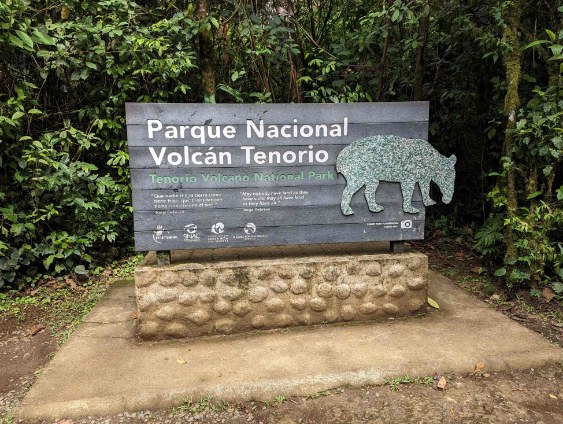
Hike to Rio Celeste at the Tenorio Volcano National Park
Main Attractions at Tenorio Volcano National Park
Visiting Tenorio Volcano National Park with your family for a hike is an excellent choice. The one main trail from the parking lot is the Mysteries of Tenorio. This trail is an out-and-back and 3.2 km long, taking you through all the main attractions of Rio Celeste waterfall, pozo azul, borbollones, and Teñidero. No strollers as there are a lot of stair sections, but it is doable for most, as our youngest was 4 years old and did the hike. Here are some of the highlights:
Related: The Best Costa Rica 7 Day Itinerary for Families
Stop 1: The Waterfall (Catarata Rio Celeste)
After about a mile of relatively flat, easy walking, you will reach the turnoff for the main waterfall. This is a crowd favorite, thanks to its unique blue hue. Be warned: there is a massive, steep staircase to get down to the viewing platform (which means you have to climb all the way back up!). The view at the bottom—a powerful waterfall plunging into a pool of electric blue water—is the ultimate payoff.
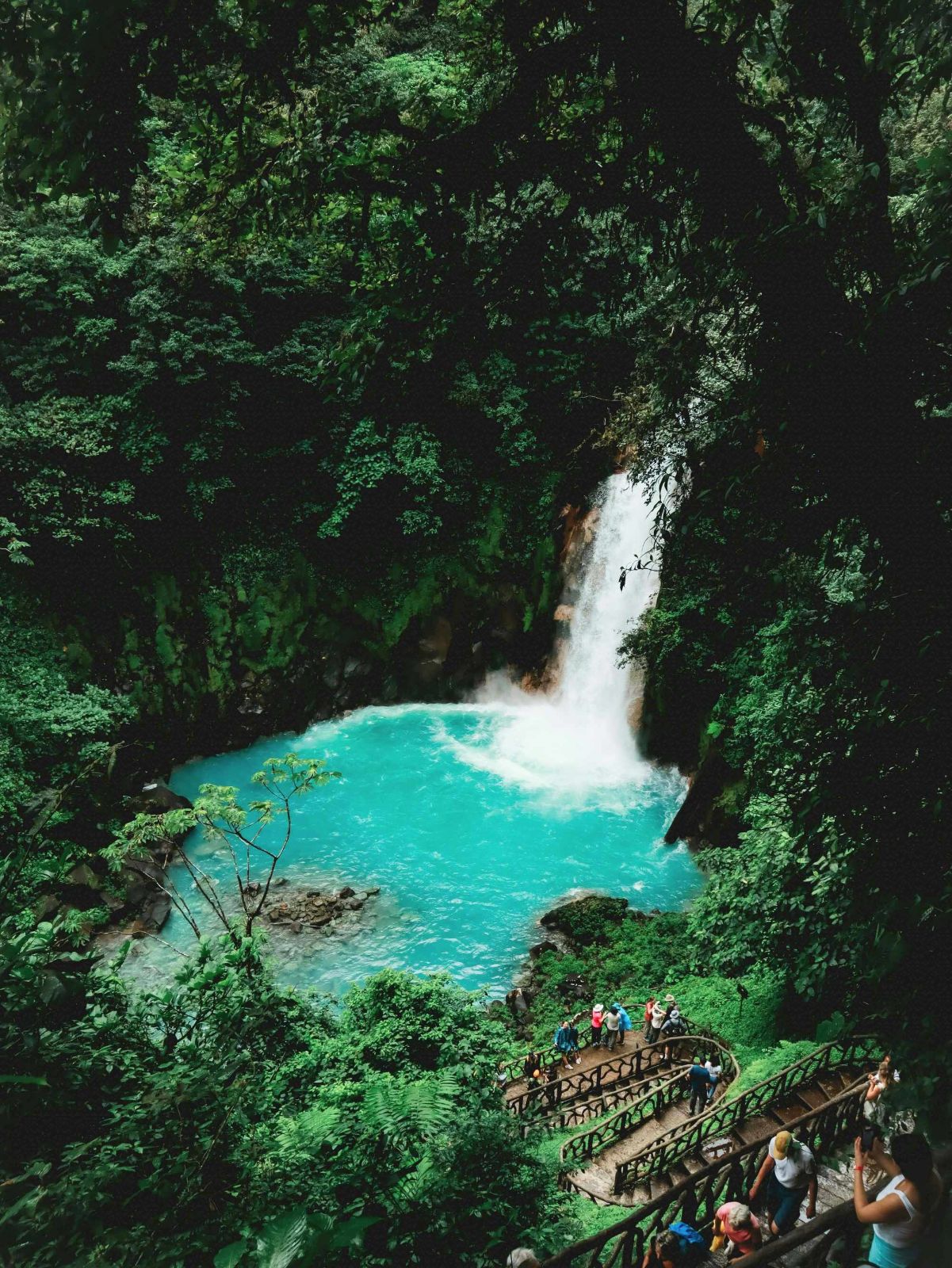
We actually didn’t spend much time here as we wanted to do the entire hike and didn’t want to tire out the kids with extra stairs, but it is quite beautiful. You will be able to make it to this point fairly easily. The crowd thins out a bit if you continue on from here.
Visit our travel insider resources for easy and effortless travel overall.
Stop 2: The Blue Lagoon (Laguna Azul)
Once you conquer the stairs and continue down the main trail, you will reach the Blue Lagoon. It is a stunning, calm pool of vibrant turquoise water surrounded by lush green jungle. Note: Swimming is strictly prohibited anywhere inside the national park to protect the water quality, so keep the kids on the trail!
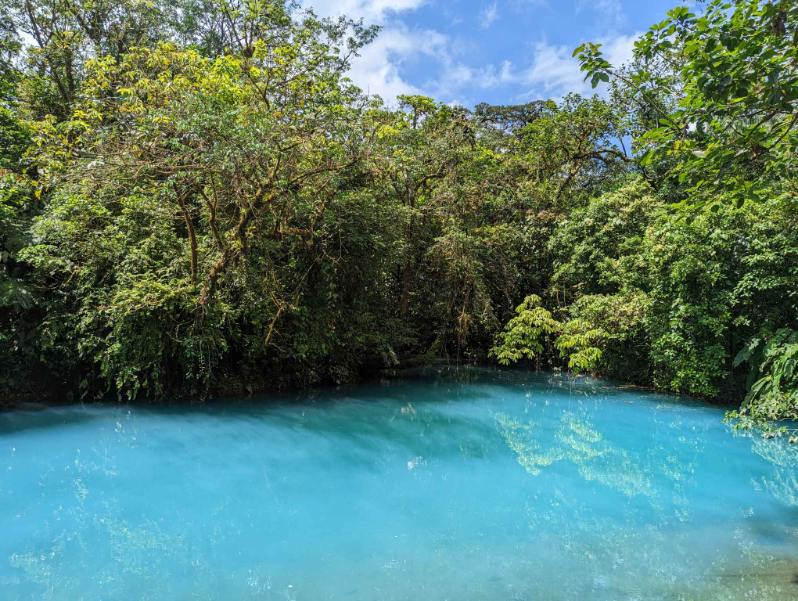
Photography Tip: It’s a great spot for photographs down by this pool. Use this point to take a walking break, and wait for space at the low fence to take your photo. It’s the best spot on the trail as the blue pops in photos.
Stop 3: The Boiling Mud (Los Borbollones)
A little further down the path, you will smell the Celeste River before you see it. This section features bubbling hot springs pushing through the riverbed, releasing a strong sulfur scent. This ultimately is the product of volcanic activity. Kids usually find the “rotten egg” smell equally gross and hilarious.
Stop 4: The Meeting of the Waters (Los Teñideros)
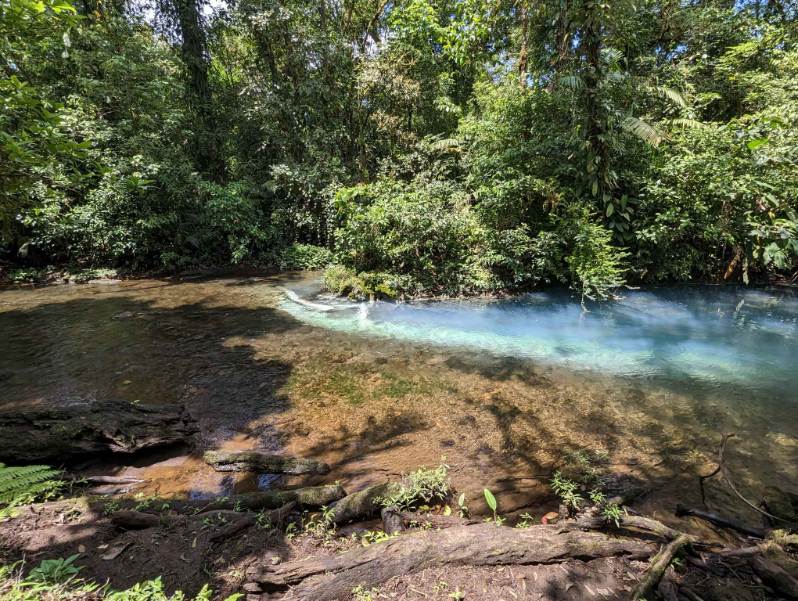
This is the end of the trail and the coolest science lesson of the day. This is the exact spot where two clear rivers (the Rio Buena Vista and Rio Quebrada Agria) converge. When they mix, a reaction with the minerals on the river bottom creates an optical illusion, instantly turning the water that famous bright blue. And congrats, you completed the hike (and now you backtrack all the way back).
Why the meeting of the waters is magical: You can spot turquoise water in many other places, but this is the only spot where you can see the color change. Science!
Quick and Easy Links
- Flights & Hotels: Booking.com, Expedia, or Hotels.com
- Tours: Get Your Guide
- Vacation Rentals: VRBO
- Language Learning: Babble
- See our Travel Insider Resources Page for tools to make travel day easier
Tenorio Volcano National Park Information
- Tickets: Purchase in advance on the SINEC site (click “Buy”)
- Park Hours: The park is open daily 8am-4pm, the last entry is at 2pm.
- GPS Parking & Entrance Coordinates: 10°42’57.5″N 84°59’14.3″W | Station El Pilon, Tenorio Volcano National Park
- Parking: Bring cash ~$2-4 per car, as fees may have changed.
- Preparation: The trails can be muddy and slick, so good hiking boots and long pants are recommended. We did however, wear shorts due to the temperature when we visited. Bring non-disposable water bottles and any snacks you need. No strollers. If traveling with young kids, always bring a small first aid kit, just in case.
- Difficulty: The trail to the Rio Celeste waterfall itself was easily doable, but it involves a steep staircase to get to the good viewpoint. We recommend you hike the whole ~3-hour trail. During this trek, there are many small water crossings, steep steps, and potentially muddy situations. Do consider all of the stair steps if you have bad knees. We did the hike with our 4 and 6-year-old kids; the 4-year-old occasionally needed help, but not the 6-year-old.
- Facilities: On the way to the ticket counter is a restroom building.
- Swimming: While swimming is not allowed within the park, there is a location to go outside of the park (details below!).
- Travel Tip: For the clearest waters, visiting during Costa Rica’s dry season (December to April) is ideal. However, Rio Celeste is beautiful year-round, so you can plan your trip whenever it suits you best.
Please remember to follow eco-friendly tourism practices, like bringing reusable water bottles and minimizing waste along your hike. Bring bug spray and snacks, and stay hydrated.
Need a cell phone data plan while abroad? See how an eSIM for travel is an easy option.
Lunch Highlight Near Rio Celeste
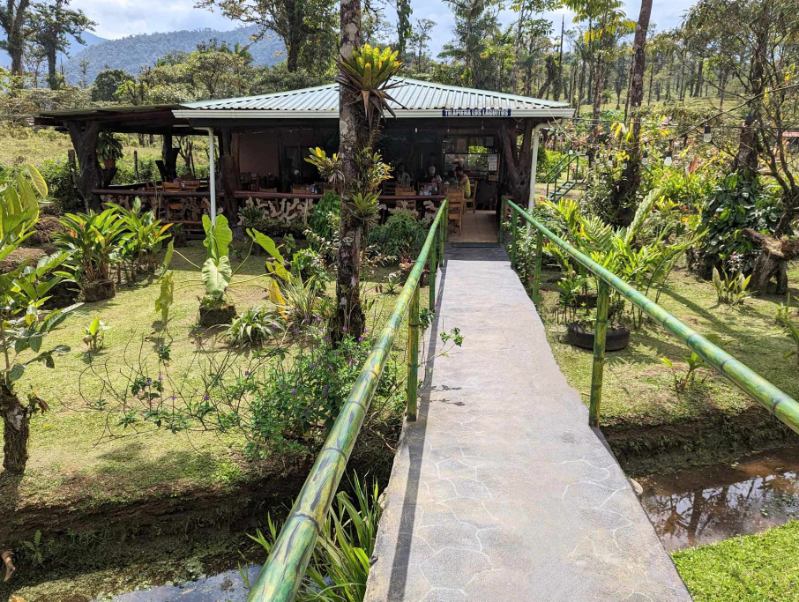
Now that you’ve worked up an appetite hiking at Tenorio Volcano National Park, you’ll be tempted to have a bit to eat right across the street from the parking lot. It’s not a bad idea, but we enjoyed taking a 10-minute drive (take a right out of the parking lot) to Tilapiera Los Laguitos y Restaurant Rio Celeste. It feels more remote, has excellent seafood, and is picturesque! That was enough reason for us to avoid a parking lot view and some tourist congestion. The kids found some things to eat here, too. Go here for the vacation vibes you were hoping for.
Visit the Oldest Tree in Costa Rica
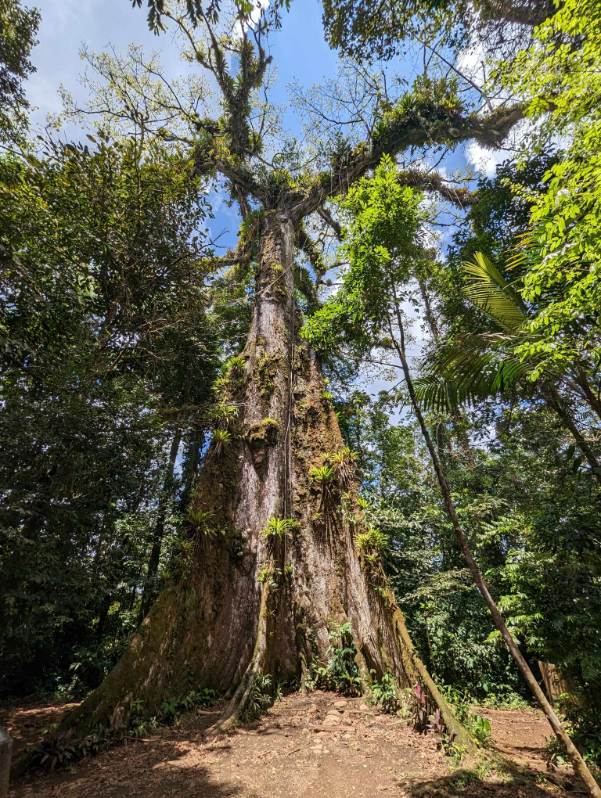
There’s another cool hidden gem right near the entrance of the national park – it’s none other than the oldest tree in Costa Rica! This ancient behemoth, named Árbol de la Paz, is a testament to this amazing country’s rich history and natural beauty. It’s only a 7-minute drive away from the Tenorio Volcano National Park, located here. We consider this a must-visit based on the short duration of the visit. You only need about 15 minutes. There is no parking lot, so pull over near the side of the road.
Note: Some locals may be attempting to be tour guides to make some money, so choose your own adventure with that!
Taking an early morning flight? See our early morning flight tips.
Where to Swim For Free Near Rio Celeste (The Local Spot!)
Since you can’t swim inside the national park, you will definitely be ready for a cool-down once you finish the hike. Thankfully, there is an incredible, free public swimming spot just outside the park boundaries!
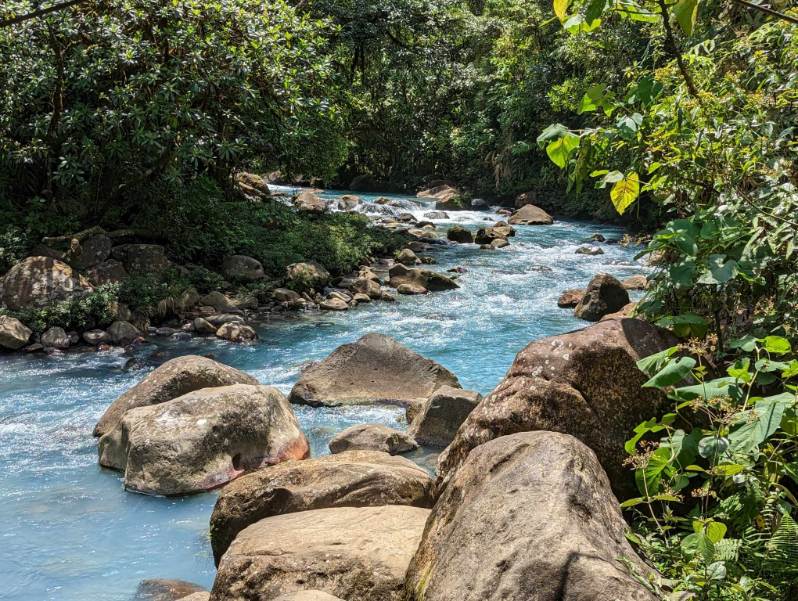
Head to the bridge over the Rio Celeste (just down the road from the park entrance) to the Rio Celeste Free Pool. You’ll find it here, and use street parking. This is where the locals go to swim and splash in the bright blue water. It’s an authentic Costa Rican experience and the perfect reward after climbing those waterfall stairs. Even if you don’t want to take a swim, run down for a quick photo. It’s so blue!
After Rio Celeste, Stay the Night in Bijagua
The guide above is about a one-day visit to Rio Celeste, but once you’re in this area, we promise you’ll want more time. Plan a night to stay in nearby Bijagua. We added a stay in Bijagua when we were looking for an authentic area near must-see destinations, but less touristy. Bijagua is perfect. Some favorite accommodations are on working farms (fincas) that are unlike many other stays you could have in Costa Rica. Staying here also gives you time to add on some amazing nearby experiences.
Accommodations in Bijagua
Mei Tai Cacao Lodge – We stayed at this B&B and finca. Each casita is completely separate and remote around the property. Amazing! We had a two-bedroom unit for our family (note, this is primarily an adults-only lodge due to the serenity of the B&B). The kind owners will schedule your restaurant delivery whenever you want it, and they serve a wonderful breakfast. Best yet, this is a working cacao (chocolate) farm as the owners are from Belgium. This is a gem! Reason number #1,000 it is amazing — we saw a toucan when we were checking in.
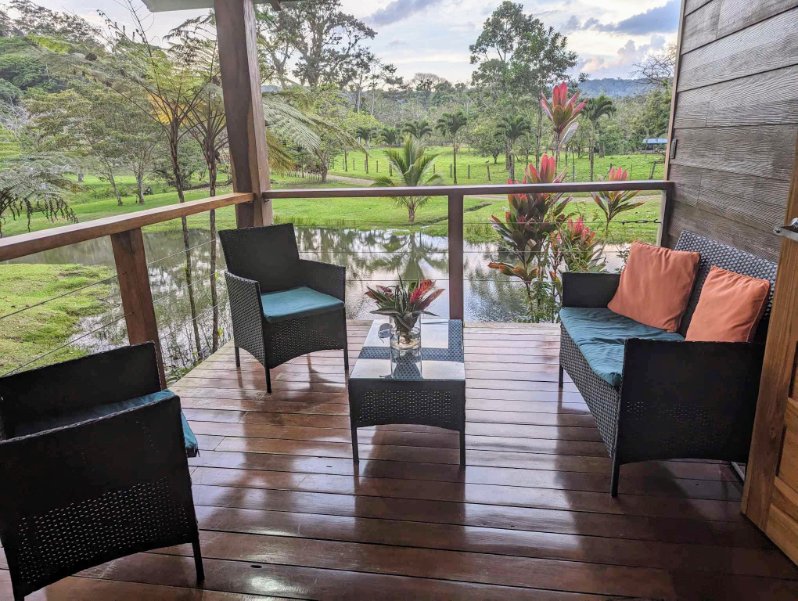
Casitas Tenorio B&B – This was sold out when we visited, but give these private casitas a look to see if they are available for your dates.
Rio Celeste Hideaway Resort– This resort offers a 2-queen bed floor plan for families of four, and they also have rooms with a king bed. Amenities and scheduling for your stay are top-notch at this resort. It’s an ideal location for staying close to Rio Celeste in Costa Rica.
Add-On Tour Options Near Rio Celeste
Sloth tours
Seeing sloths and other creatures in the wild is made possible through Jungle Life Costa Rica – Rainforest Tours. Tickets are available in advance on Viator, or you can visit the tour operator’s website and contact them with any questions. I found them very responsive on WhatsApp. The kids loved it, and it was a very easy walk.
The guides all come out early in the morning and scout out where the animals are — so, they all have a good idea of where things are before your tour (meaning you have a very good chance of seeing great things!). They found monkeys, sloths, snakes, and very small frogs for us. They knew exactly which leaves to look under to spot sleeping frogs! Oh yeah, we forgot that frogs are nocturnal. If that interests you, this company also does frog and jungle night tours.
White water rafting
White-water rafting on the Tenorio River in Costa Rica is a thrilling adventure that offers a unique combination of excitement and natural beauty. The river’s class III and IV rapids provide a challenging yet enjoyable experience for rafters, while the surrounding landscapes offer a glimpse into the country’s rich biodiversity.
This 10-mile tour is the one we recommend. Kids must be 8 years old to book, so we didn’t partake, but our finca owner recommended we raft while in the area.
The highlight of the trip is the river’s 12-foot drop, which promises to be an exhilarating moment for the entire family. Beyond the adventure, you will enjoy immersing yourselves in the stunning environment and connecting with Costa Rica’s vibrant ecological heritage. It is one of the most beautiful settings in the world.
FAQ: Planning a Rio Celeste Family Day Trip
How hard is the Rio Celeste hike with kids? It is completely doable, but expect it to be challenging in a few spots. The trail to the main waterfall is relatively flat, but it can get very muddy if it has been raining. The hardest part is the massive staircase leading down to the waterfall platform—which means a steep climb back up! Take your time, bring plenty of water, and enjoy the magical jungle surroundings. This is not a hyperbole 🙂
Can you swim in the Rio Celeste? You cannot swim inside Tenorio Volcano National Park to protect the delicate ecosystem and water quality. However, there is a fantastic (and free!) public swimming spot just outside the park boundaries near the bridge where the locals go. We highly recommend stopping there to cool off after your hike!
How do I fit Rio Celeste into my Costa Rica itinerary? Rio Celeste is the perfect transition stop. Instead of doing it as a there-and-back day trip from La Fortuna, we recommend doing what our family did: use it as a bridge. We came from the Arenal Volcano area, stayed in Bijagua near Rio Celeste, then finished our travels near Tamarindo and the Western coast beaches.
Onward Travel: Continuing From Rio Celeste to Guanacaste
If you follow our route, leaving Rio Celeste puts you in the perfect position to head straight toward the beaches of Guanacaste. It’s a beautifully efficient way to see the rainforest, a volcano, and a world-class waterfall before you officially hit the sand.
1-Day summary: Start your day with a hike in Tenorio Volcano National Park and see Rio Celeste. Then, stop for lunch along the way to the oldest tree in Costa Rica. Dip in the free swimming spot and then consider staying in Bijagua for the night. If you do, take a sloth tour or a whitewater rafting trip in the morning before your next stop. Yes, we like to make your planning easy.
Check out our additional guides on Costa Rica travel for more details on how to make the most of your vacation time, or use our trip planning guides or travel resources.
All the best. Happy, breezy travels.
Peruse more of our Family Travel guides: